


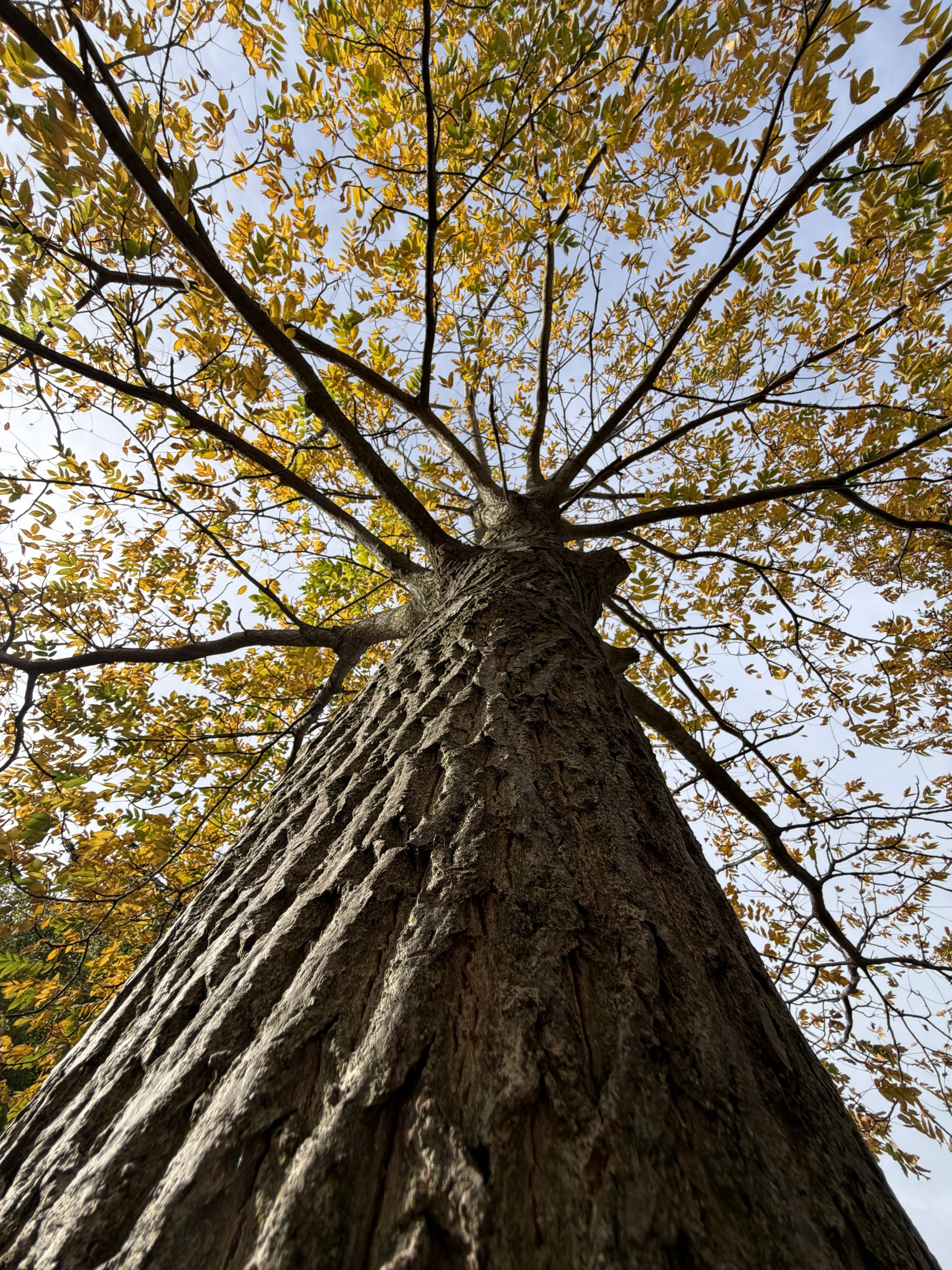
After 18 years on Ontario’s endangered species list, efforts to help restore the province’s native Butternut tree are gaining momentum. Trees for Life and Vineland Research & Innovation Centre have successfully produced over 600 Butternut trees this year, marking an important milestone in their collaborative effort to support the species’ recovery.
This fall, trees are being planted in eight southern Ontario communities, including Brighton, helping establish local populations of this endangered native species.
Other plantings are happening in Bourget (Clarence-Rockland), Cumberland (Ottawa), Exeter, Finch (North Stormont), Guelph, Kemptville, and Pembroke,
“The Butternut is an important part of Ontario’s natural landscape, and helping this endangered species recover requires a long-term commitment,” said Marina Dimitriadis, Executive Direction, Trees For Life. “Together with Vineland Research & Innovation Centre and our planting partners, we’re building the knowledge and capacity to grow more healthy trees and support the Butternut’s return to communities across the province. This year’s plantings mark an important step forward.”
Over the past three years, Vineland Research and Innovation Centre has provided research and technical support to identify the growing conditions and propagation methods that help nurseries produce healthier Butternut trees more consistently. The work has been supported by funding from the Ontario Species at Risk program, with input from a variety of industry partners including the Forest Gene Conservation Association, nursery professionals and restoration practitioners.
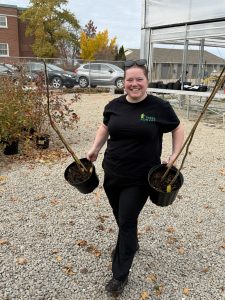
“Many of our rarest trees are difficult to grow; they may have poor germination or their vigorous root systems don’t work well with conventional potting systems. Our research goal was to find the very best way to grow a butternut and share that with nurseries who do the absolutely essential work of growing our trees,” said Rhoda deJonge, Director Plant Responses and the Environment. “We aim to make every seed count, and to assure that these rare trees have the highest quality root systems so that they can thrive on the landscapes where they are needed most.”
The research identified key barriers to producing more planting stock, including limited seed supply, inconsistent germination, uncertainty around propagation methods, and the need for clearer nursery guidance. Production trials examined growing media, fertilizer, containers, growing settings, seed treatments, seed source, husk status, germination timing, production setting, and pot type.
Key findings:
-
Growing medium matters: A well-aerated growing medium supported the best germination.
-
Fertilizer encourages stronger growth: Seedlings developed greater height and thicker stems.
-
Container choice affects root health: Air-pruning containers produced healthier, more evenly distributed root systems and reduced root circling, which can affect a tree’s long-term stability and performance after planting.
-
Seed preparation can encourage earlier germination: Scarifying seeds before sowing can help with earlier germination, but may not be needed in all situations.
-
Seed quality influences success: Seed source, quality, maturity, storage history, and dormancy response all play a role in successful production.
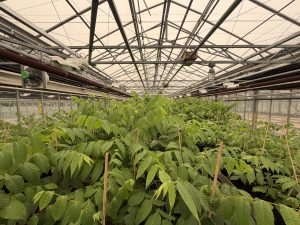
Together, these findings are helping turn research into practical nursery guidance, providing a roadmap for increasing Butternut production capacity in the province. They point toward improved growing media, healthier container systems, and a more targeted approach to seed treatment. Just as importantly, they show the value of keeping good records on seed source, germination timing, and production conditions so that growers can learn from each production cycle.


Comments